18th September - 18th December, Thessaloniki
Slavs and Tatars is a faction of polemics and intimacies devoted to an area east of the former Berlin Wall and west of the Great Wall of China known as Eurasia. The collective’s work spans several media, disciplines, and a broad spectrum of cultural registers (high and low) focusing on an often forgotten sphere of influence between Slavs, Caucasians and Central Asians. Their Friendship of Nations: Polish Shi’ite Showbiz was presented at the 10th Sharjah Biennial earlier this year and will be on exhibit at The Royal Academy of Fine Arts (Kiosk) in Ghent in December 2011. Slavs and Tatars have published Kidnapping Mountains (Book Works, 2009), a celebration of complexity in the Caucasus, Love Me, Love Me Not: Changed Names (onestar press, 2010) and most recently Molla Nasreddin: the magazine that would've, could've, should've (JRP-Ringier, 2011). Solo engagements in 2012 include Vienna’s Secession, MoMA (NY), and Künstlerhaus Stuttgart.
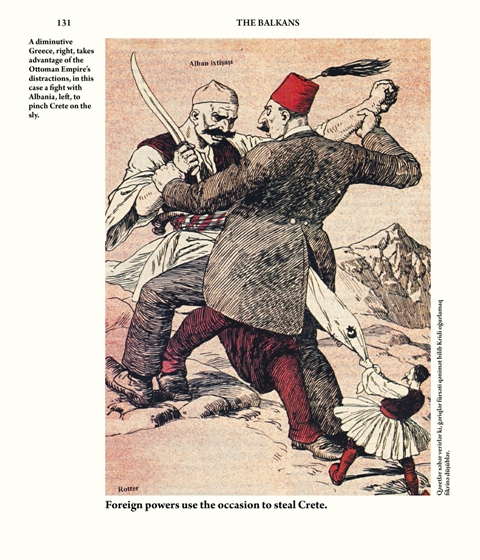
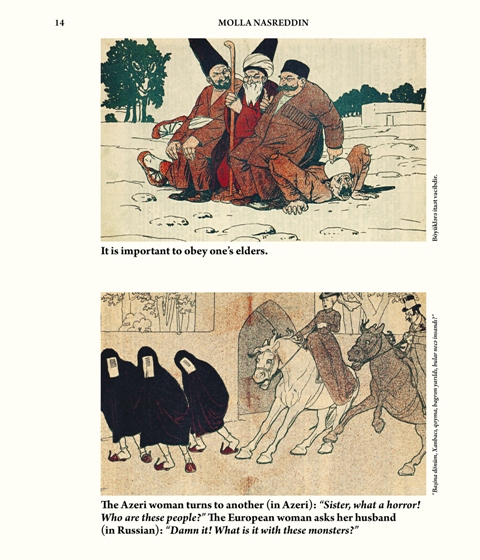
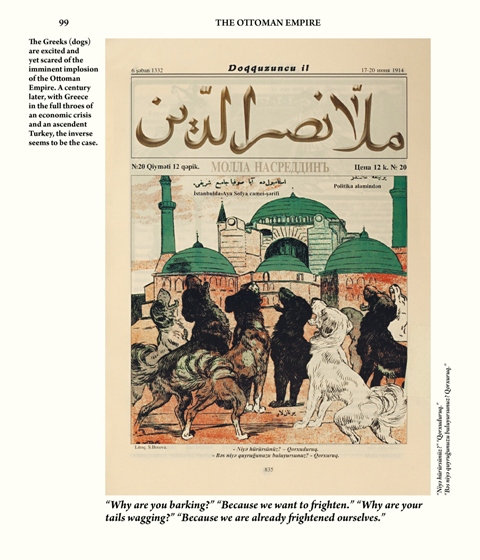
We first came across Molla Nasreddin several years ago on a cold winter day in a second-hand bookstore near Maiden Tower, in Baku. It was bibliophilia at first sight. Its size and weight, not to mention print quality and bright color, stood out suspiciously amongst the more meek and dusty variations of Soviet brown in old man Elman’s place. We stared at Molla Nasreddin and it winked back at us, like an improbable beauty.
Recently reissued in its entirety by the Azerbaijan Academy of Sciences, each volume of Molla Nasreddin runs roughly 700 pages, with a total of eight imposing tomes in all. Since that blistering day, several years ago, carrying and caring for these volumes between Brussels, Moscow, Paris, New York, Berlin, and Warsaw has toned our muscles if not our thoughts. We have wrestled with Molla Nasreddin: like any object of intense interest, it both repels and attracts us. But it is rare to embrace one’s antithesis, as we have done with this volume: spending years translating, funding and publishing a historical media platform with which we often disagree. Standing squarely as a champion of secular, Western values, the weekly is in some sense a mascot, in reverse, of our practice. Where Molla Nasreddin is secular and pro-Western, we tend to err on the side of the mystical and are suspicious of the wholesale import of Western modernity. But, like the best cultural productions, Molla Nasreddin is polyphonic, joyfully self-contradictory and squarely on the side of the creolization that results from multiple languages, ideas and identities. The magazine’s pan-Caucasian identity (itinerant offices between Tbilisi, Baku and Tabriz), linguistic complexity (across three alphabets) and use of humor as a disarming critique make for a trifecta which, despite any partisan polemics, we celebrate unequivocally.
Slavs and Tatars